4 LLM-assisted Interpretation
Step 3 is an optional module that uses Large Language Models (LLMs) to evaluate the biological plausibility of enriched metabolite sets identified in Step 2.
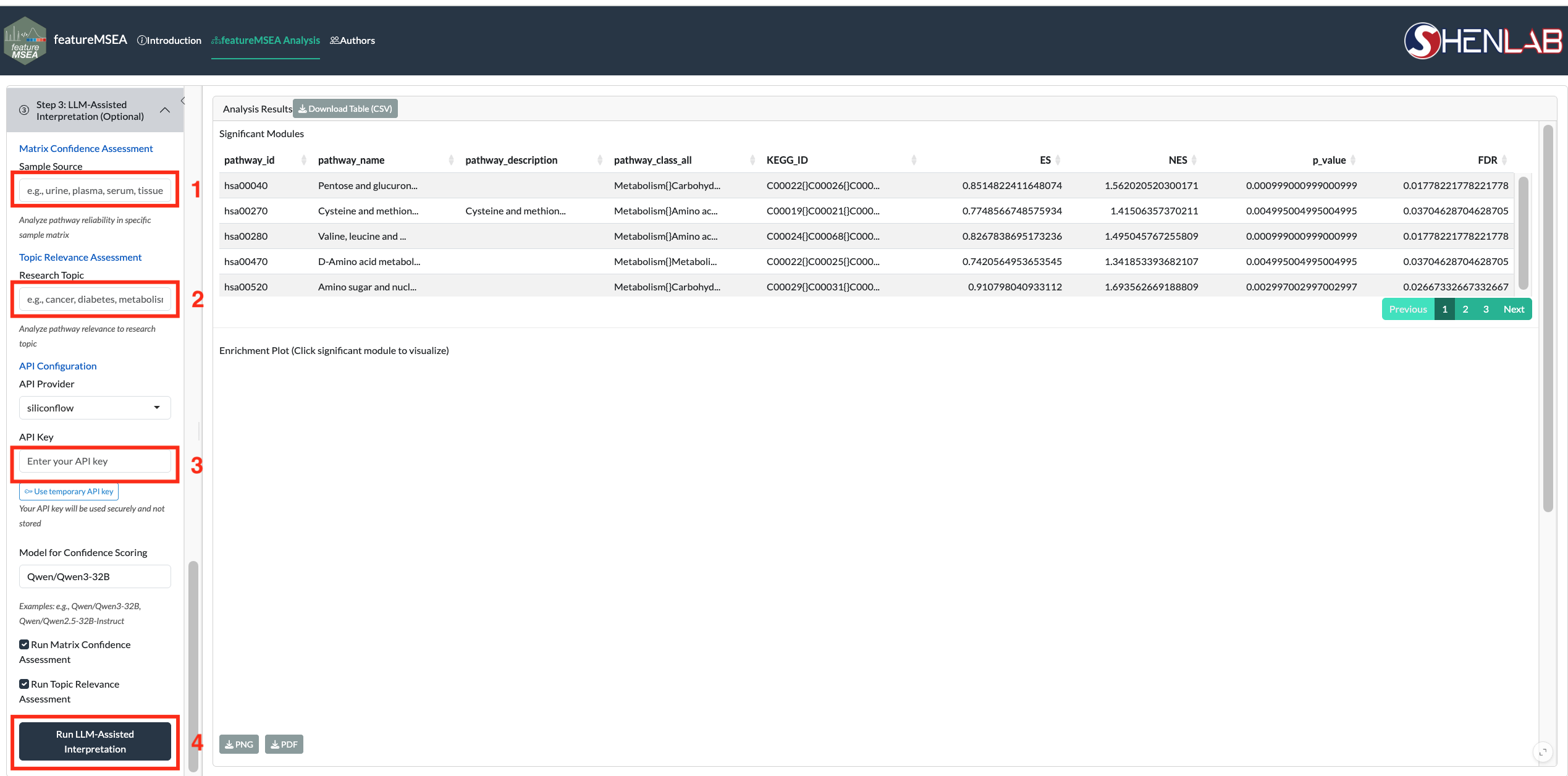
Figure 4.1: LLM evaluation interface
4.1 Evaluation modes
4.1.1 Matrix Confidence Assessment
Scores the biological plausibility of each enriched metabolite set within the specified biological sample matrix.
-
Input: Biological matrix type (e.g.,
"urine","plasma","serum","blood","feces") - Output: Per-metabolite-set matrix confidence score (0–100) reflecting whether the metabolite set represents a coherent and biologically plausible biochemical entity within the specified sample matrix
4.1.2 Topic Relevance Assessment
Searches PubMed and scores each enriched metabolite set based on published evidence linking it to your specific research context.
-
Input: Research topic (e.g.,
"type 2 diabetes","colorectal cancer","pregnancy") - Output: Per-metabolite-set topic relevance score with supporting PubMed literature (PMIDs)
4.2 API configuration
featureMSEA supports two LLM providers:
| Provider | Model | Notes |
|---|---|---|
| SiliconFlow (default) | Qwen series | Cost-effective; recommended for most users |
| OpenAI | GPT series | May produce more nuanced biological summaries |
Enter your API key in the API Key field before running. Keys are not stored or transmitted beyond the selected LLM provider.
4.3 Running the evaluation
- Enter the Sample Source (biological matrix) and/or Research Topic.
- Check the analyses you want to run (both enabled by default).
- Select your API Provider and enter your API Key.
- Click Run LLM Evaluation.
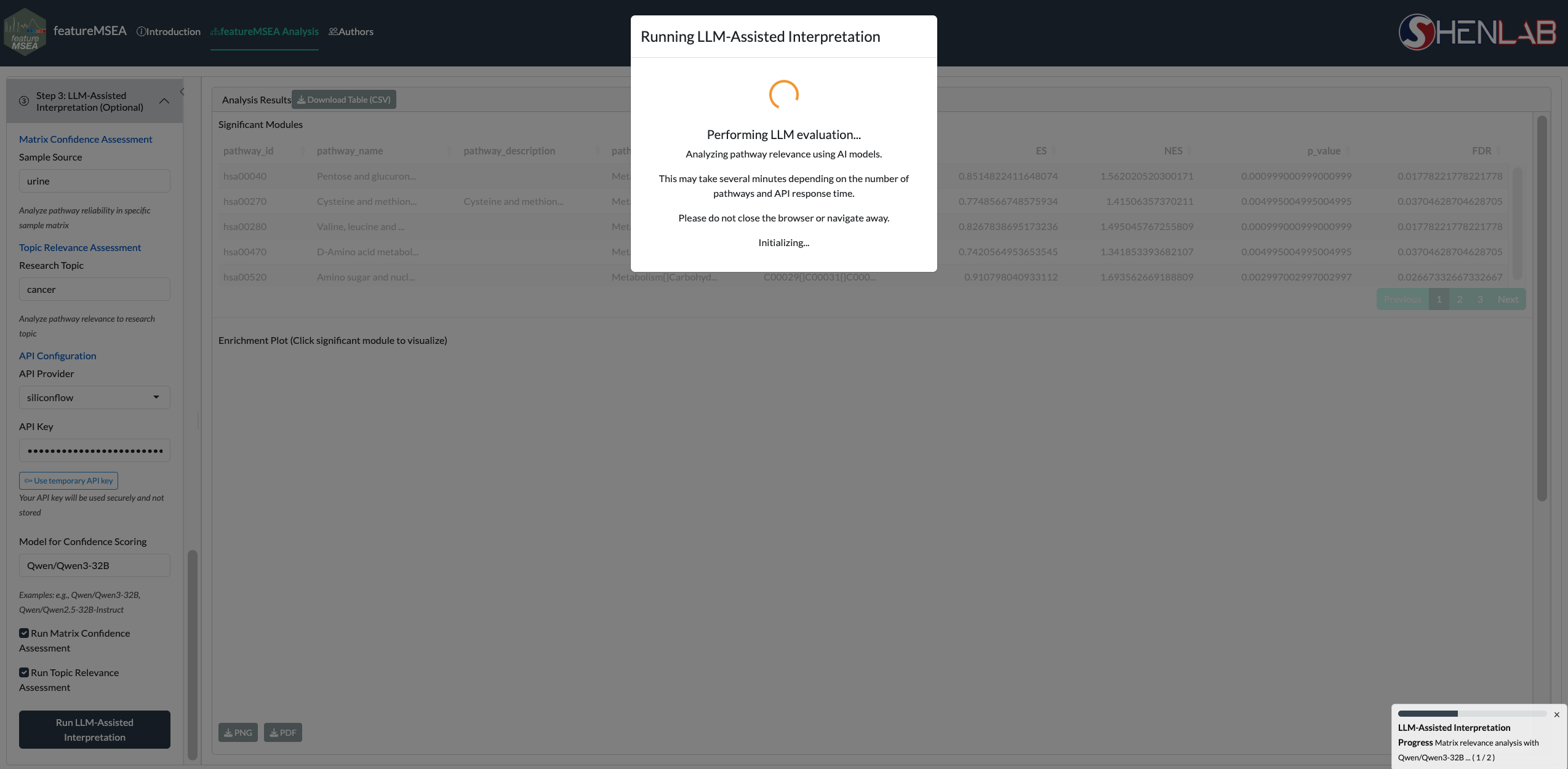
Figure 4.2: LLM evaluation running
Results are returned as a scored table per metabolite set. Download the full report via Download LLM Evaluation.
Caution: LLM outputs are probabilistic. Always verify AI-generated interpretations against primary literature. Use this module to guide hypothesis generation, not to replace domain expertise.